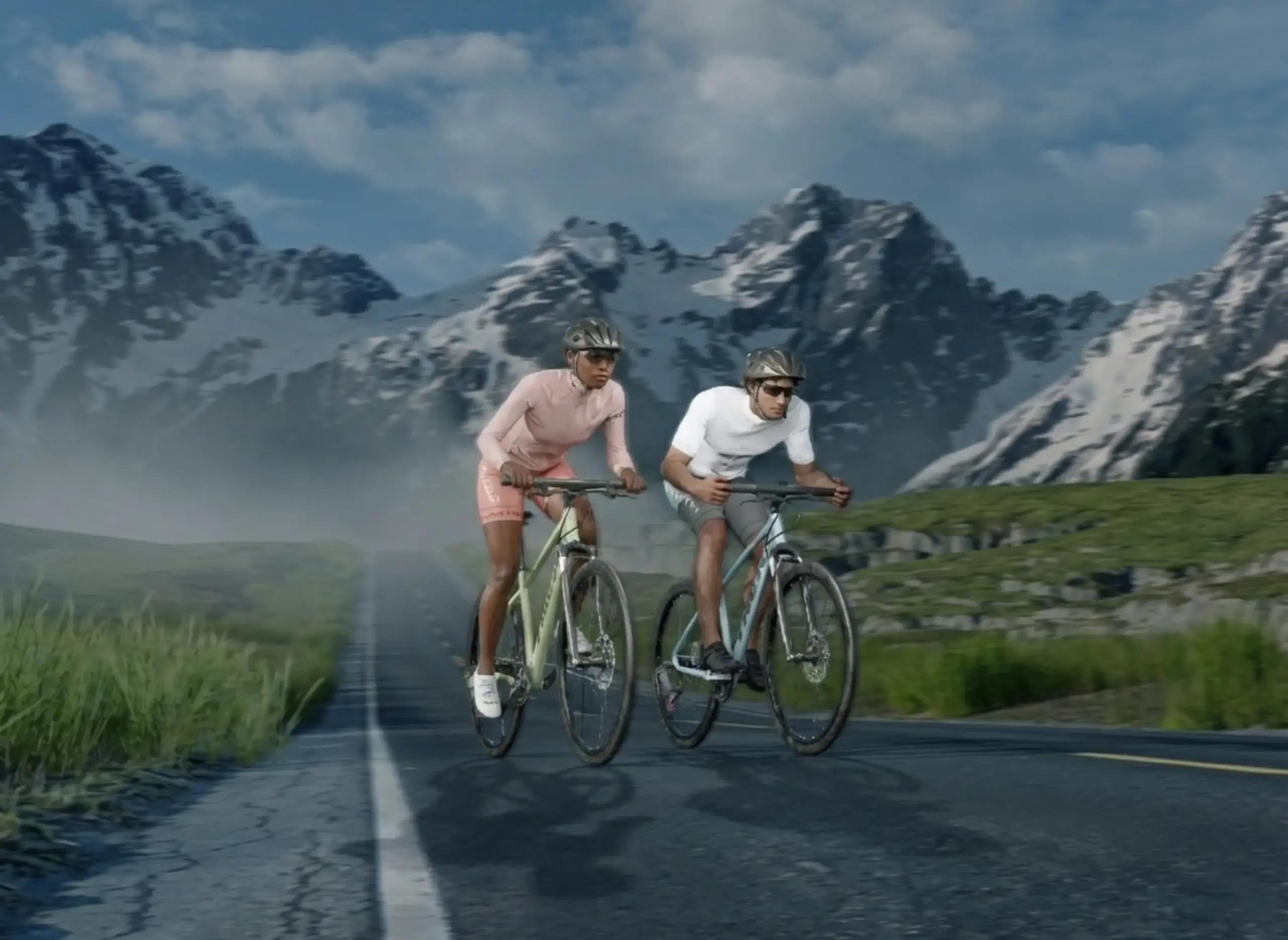
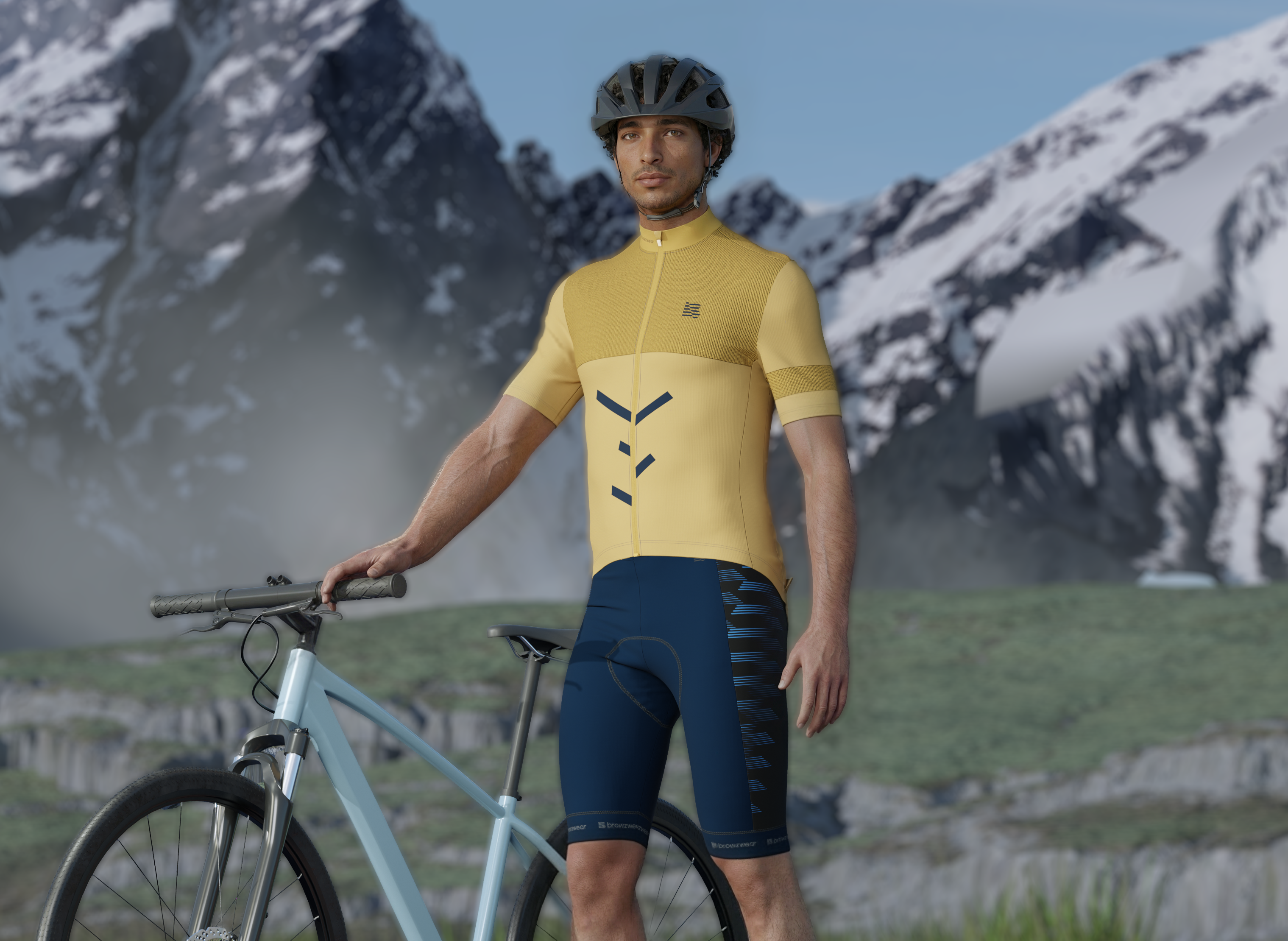
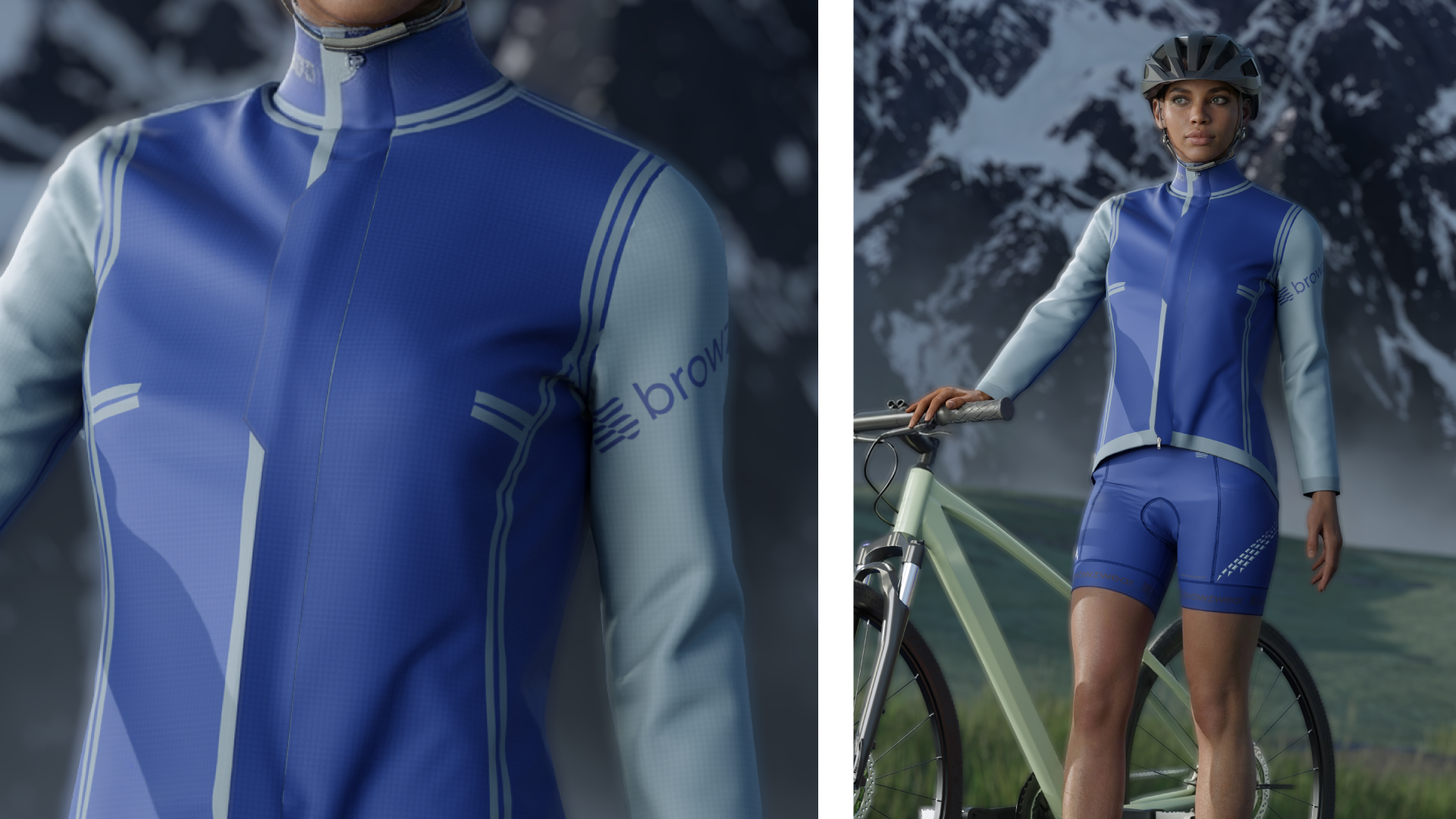
Cycling wear and its components combine engineering and design: aerodynamic shells, compressive leg panels, breathable inserts, and crucially, precision padding (the chamois). Just like other fashion design has particular considerations for their category, performance wear, athleisure, activewear, so too does cycling wear.
A 3D-first fashion design workflow that emulates the real physics of fabric and considers aerodynamics, moisture-wicking and padding a native digital asset empowers cycling brand design teams to determine comfort, fit, and performance well before a first physical sample is cut. Browzwear supports designers and technical designers at cycling apparel brands on the core design elements of their cycling garments.
Below you'll find a brief 3D design guide for the cycling apparel industry. In this guide, the experts at Browzwear lay out what to model, what assets to produce, and how to turn over production-ready files for high-performance cycling wear.
Why a 3D-first approach matters
-
True material behavior: Record stretch, recovery, thickness, and bending to ensure panels are responding as they should on a rider.
-
Integrated asset design: Put chamois, reinforcement panels, and bonded tapes into context, not as afterthoughts.
-
Quick, inexpensive iteration: Pressure maps and strain visualizations mean that foam-tool revisions and physical sampling are minimized.
Getting production & factory-ready assets
For production, you require a complete and unambiguous set of digital files and simulation outputs: riding-pose 3D garments (OBJ/FBX/GLTF) and avatars, layered chamois objects and separate meshes for bonded tapes and reinforcement panels, DXF patterns with seam allowances, graded sizes, marker plans, fabric property files (FAB output recommended) plus PBR textures and sublimation files, spec sheets (chamois zonal densities, adhesive and stitch specs).
Include simulation artifacts such as fit/strain maps, pressure maps from the seated pose, range-of-motion reports, and rendered exploded views of pad insertion and bonding, so that factories receive a visual check from the simulation and easy-to-follow instructions. Export DXFs with visible piece IDs and grainlines, have a full tech pack (BOM, stitch directions, QA checkpoints), and the names/metadata should be consistent with the factory PLM/ERP (to reduce ambiguity in order to speed production).
Building assets for e-commerce
And for retail and digital channels, create assets in a visually rich, optimized way: hero and lifestyle renders; 360° product spins; GLTF/GLB models ready for AR; size & fit visualizations with zoomable texture/print maps; thumbnails with consistent lighting and backgrounds.
Include colorway options, fabric swatches (high-res images and texture maps), alt text, SEO-friendlier product copy, short product videos and motion clips, and downloadable spec PDFs for technical clients. These assets enhance the online portrayal of fit and performance, and modern cycling aesthetics, and minimize returns.
Final Thoughts & How to Get Started
Creating cycling wear, and any performance wear or activewear to be honest, in 3D with measured fabric physics and considers production-ready padding, moisture-wicking, breathable fabrics and other considerations important to cyclers speeds up iteration, improves rider comfort, and reduces waste.
Fabric Analyzer guarantees your digital fabrics use “real” materials of the world, and VStitcher’s padding feature makes pads easy to design, validate, and export.
Combined they provide a digital pipeline brands can rely on from fit to factory and right up to e-commerce.