What does it take to simulate a Tudor-era knit, recreate a runway texture stitch-by-stitch, or design for an iconic fashion house — entirely in 3D? At the University of Applied Science Albstadt-Sigmaringen, ten students found out in just 22.5 hours.
About the Course
The elective course 3D Simulation is part of the M.Sc. Textile and Clothing Management programme at the Faculty of Engineering. It gives students a comprehensive grounding in 3D simulation software and its role in contemporary apparel development — with a particular focus on the methodological differences between simulating cut-and-sew garments and the more technically demanding world of flat-knitted structures.
Using VStitcher by Browzwear as the primary platform, students developed a complete digital look comprising at least two distinct garments, choosing their own theme, textiles, and creative direction. They were further encouraged to integrate complementary tools — knit-specific software, advanced renderers, and AI-based applications — to push their final output beyond the baseline simulation.
Learning Curve
The university's strong emphasis on 3D simulation throughout its curriculum meant many students arrived with prior experience. Even so, the course attracted participants with limited prior exposure, and the results were impressive across the board. Within the compact 22.5-hour timeframe, every student successfully developed and simulated a complete digital look.
Challenges & Support
Most students found creative workarounds when they hit obstacles, approaching challenges proactively and experimenting with different solutions. In a few cases, the team reached out to the Browzwear support team for guidance — consistently responsive and helpful. The Browzwear University Learning platform was also highlighted as an ongoing resource for students looking to deepen their skills after the course.
Student Projects
Each student's final examination project was a complete digital look reflecting their individual creative direction, chosen tools, and technical focus. Here are three highlights from the cohort.
Student 01 — Simone Drygant
Concept: Tudor-Inspired Look with a Highly Realistic Knitted Garment
Tools used: VStitcher · Create+ · Google Gemini AI
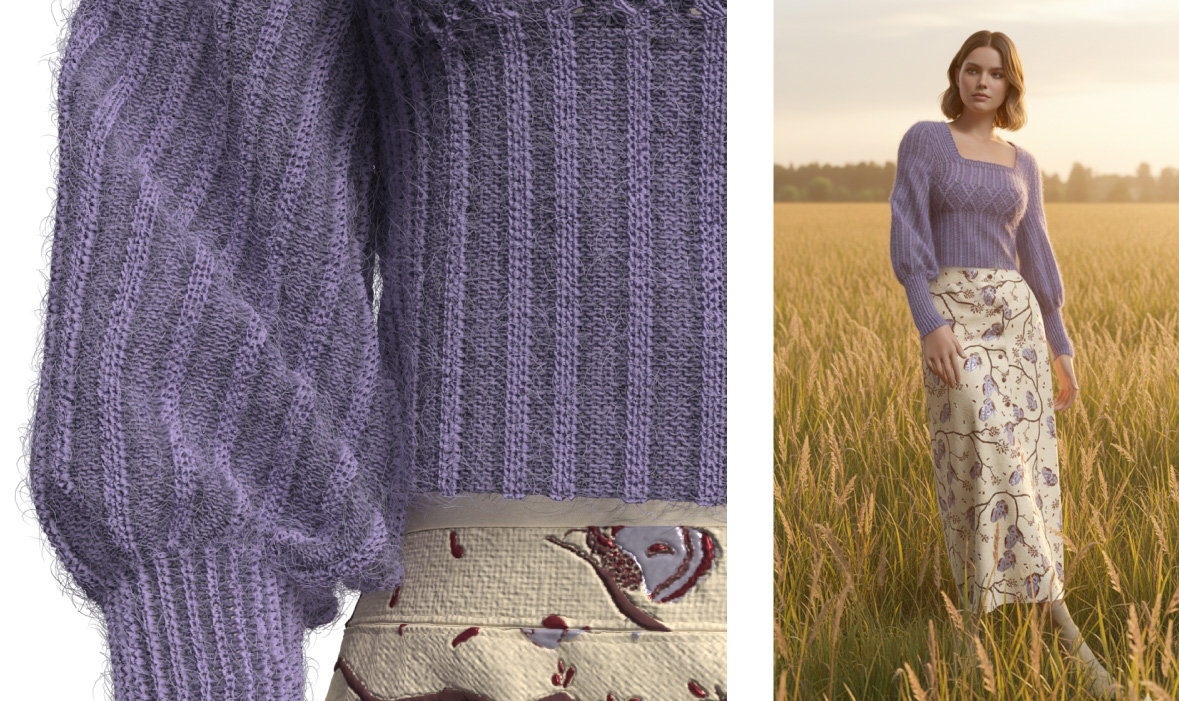
Drawing on Tudor-era aesthetics, Simone developed a historically informed digital look centered on a highly realistic knitted garment. She used Create+ for flat-knit texture creation and Google Gemini AI to produce enhanced final renderings, exploring how AI tools can add an additional layer of visual realism to VStitcher outputs.
VStitcher Experience: "Working with the Cloud Library was great — I didn't have to draft from scratch and could adjust existing patterns, making my workflow much faster. The fur tool was easy to use and gave my garments a very realistic look."
Biggest Challenge & Solution: "The correct fit of the sweater was my main challenge. I overcame it by making incremental changes step by step — VStitcher's instant visual feedback made it much easier to refine the fit until I was happy."
Student 02 — Jonas Bendel
Concept: HELIOT EMIL — Industrial Minimalism & Zipper as Design Element
Tools used: VStitcher · 2D Pattern CAD
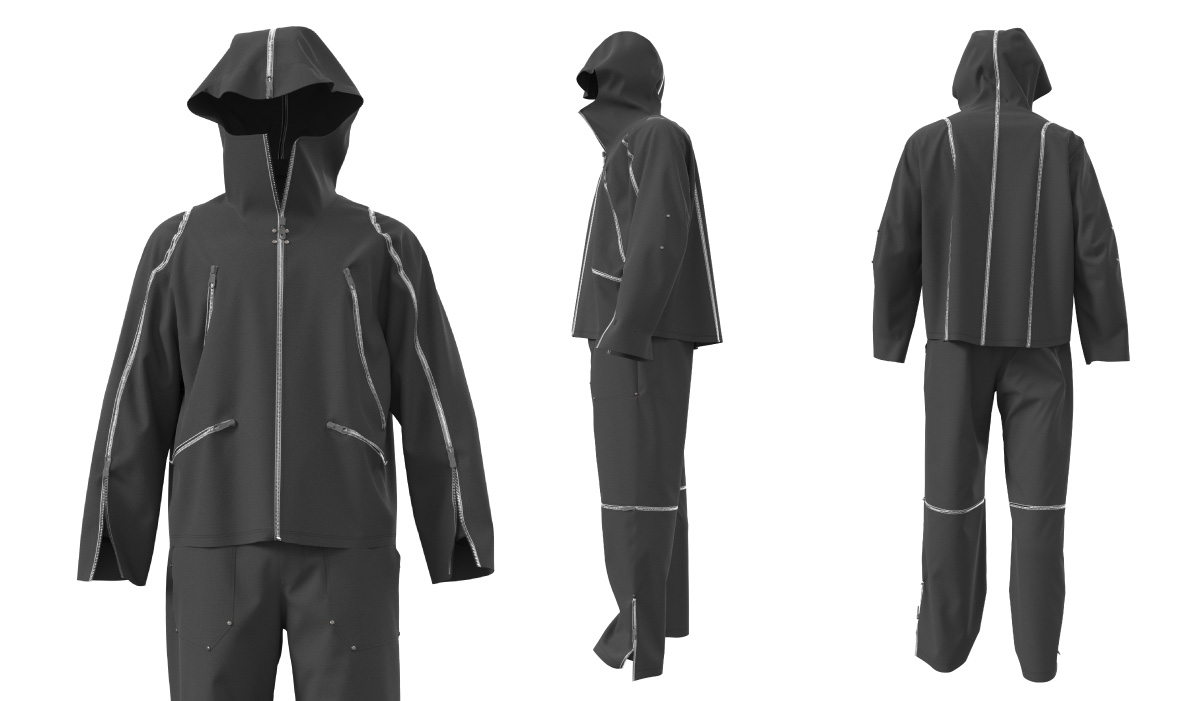
Inspired by Danish fashion house HELIOT EMIL, Jonas built his concept around the brand's signature industrial minimalism. A prior university workshop with YKK Creative Director Kei Kagami sparked the central idea: to treat zippers not as mere functional closures, but as structural and visual design components defining the garment's identity.
How 3D Changed the Process: "I no longer see garments as flat drawings but as spatial systems. Immediate simulation feedback lets me evaluate silhouette, balance, tension lines, and construction logic — it shifts design from hypothetical to evidence-based."
Biggest Challenge & Solution: "Zipper implementation was complex — they behave like separate pattern entities in VStitcher, causing initial creasing and tension issues. After testing different construction logics and refining stitch parameters, I achieved stable, accurate results."
Student 03 — Jannik Zentner
Concept: Ultra-Realistic Knit Texture Recreation — Based on MSBHV
Tools used: VStitcher · Create+ · Character Creator 5 · Autodesk Maya · Arnold Renderer
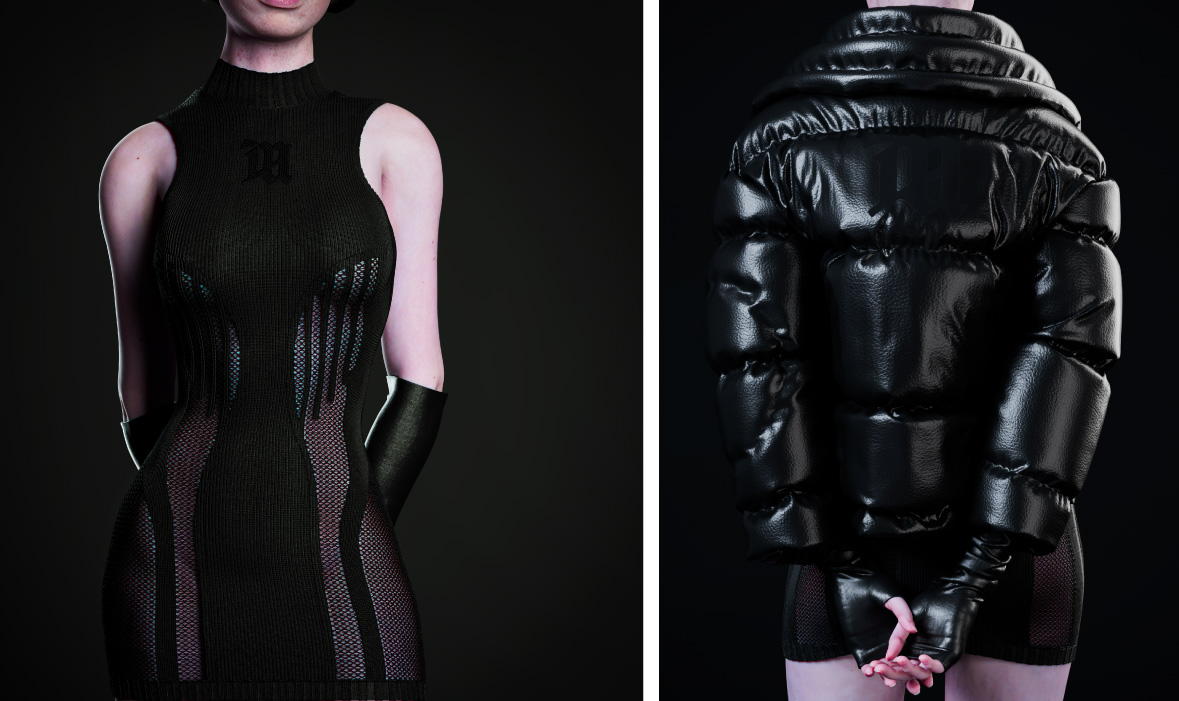
Jannik set out to digitally recreate a specific knit dress from MSBHV with maximum structural accuracy. The result was a complete look — knit dress, puffer jacket, and accessories including boots, sunglasses, and earrings — rendered in multiple colourways and poses through a sophisticated cross-platform pipeline.
VStitcher Experience: "VStitcher offers a clear and efficient workflow. Its advanced material system enables detailed control over fabric appearance, and the draping simulation is very accurate."
How 3D Changed the Process: "Working in 3D makes it possible to visualise garments immediately and accurately on the body. Quick experimentation with textures and colours — changes implemented far faster than in traditional workflows."